“Obermann,” the epistolary novel by the French Romantic Senancour, inspired Liszt to write the first volume in his collection “Années de Pèlerinage” (HN 173). A wanderer is searching for his ideals in the sol
In summer 1881 Franz Liszt composed a work that he called “Valse oubliée” (Forgotten waltz) in a letter to his publisher. The work is reminiscent of the appealing piano waltzes that the composer used to write when
The four late “Valses oubliées” are characterized by themes such as memory, sorrow and grief. Reminiscent of Liszt's 1830s waltzes, they also embed typical melodic and rhythmic clichés from salon waltzes in new ha
After the publication of the second volume of his Années de Pèlerinage (Italy), Liszt added the triptych Venezia e Napoli as a supplement. Now available in this Urtext edition.
Composer: Franz LisztEditor: Sylvia Hewig-Tröscher
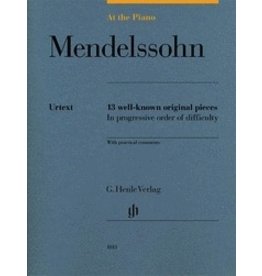
Contents: Sehr langsam from Four Piano Pieces • Andantino from Four Piano Pieces • Andante con moto from Consolations • Un poco più mosso from Consolations • Quasi adagio; cantabile con devzione from Co
Composer: Felix Mendelssohn BartholdyEditor: Christa Jost
During his summer holiday of 1842 Mendelssohn wrote four piano miniatures in each of the albums of two children to whom he was related. Years later he revised the pieces. In so doing, he deleted
Composer: Felix Mendelssohn BartholdyEditors: Ullrich Scheideler, Rudolf Elvers, Ernst Herttrich
2009 was Mendelssohn's anniversary year and this has occasioned us to publish in addition to the already existing “Songs without Words” HN 327 nearly all of
Composer: Felix Mendelssohn BartholdyEditor: Ullrich Scheideler
Ullrich Scheideler has edited one of Mendelssohn's most important and beautiful piano works, comparing it again with the sources. Henle Publishers is now issuing it in a revised edition wit
Composer: Felix Mendelssohn BartholdyEditor: Sylvia Hewig-Tröscher
Contents: Allegro non troppo from Six Children's Pieces, Op. 72, No. 1 • Allegretto from Six Children's Pieces, Op. 72, No. 3 • Allegro assai from Six Children's Pieces, Op. 72, No. 5 •
Composer: Wolfgang Amadeus MozartEditor: Ewald Zimmermann
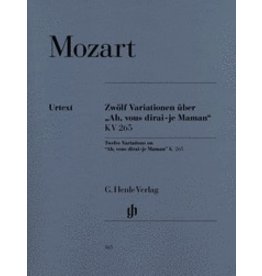
Only very few piano works have become as popular as this theme with twelve variations. It already caught on soon after Mozart's death, as witnessed by the numerous handwritten copies and prints
Composer: Wolfgang Amadeus MozartEditor: Ullrich Scheideler
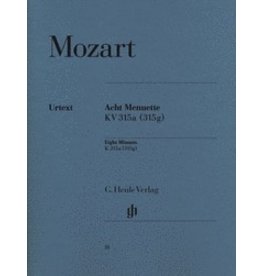
From the late 1760s onwards Mozart repeatedly composed series of dance movements for orchestra. Demand for this occasional music, which really was intended for dancing, increased in the winter
Composer: Wolfgang Amadeus MozartEditor: Ullrich Scheideler
Mozart composed his Adagio in B minor K540 at a time when his financial situation was steadily deteriorating. The war against the Turks was constraining the Viennese people's interest in music
Composer: Wolfgang Amadeus MozartEditor: Ullrich Scheideler
The genesis of one of Mozart's best-loved piano works, his Fantasy in D minor, is still shrouded in darkness. Even Mozart's sister, who came across the work in 1807 through the first edition, w
Composer: Wolfgang Amadeus MozartEditor: Ullrich Scheideler
When Maria Anna Mozart, known as Nannerl, was to receive piano lessons, her father gave her a music book in which he and others gradually wrote down little recital pieces. Her brother Wolfgang
Composer: Wolfgang Amadeus MozartEditor: Ullrich Scheideler
Throughout his life Mozart composed individual pieces for the keyboard. This wealth of material offers us an exceptional insight into his musical development. For the first time ever, we are
Composer: Wolfgang Amadeus MozartEditor: Ullrich Scheideler
The volume with a selection of Mozart's piano pieces was prepared using the musical text from the complete volume (HN 22 and 9022). It contains his best-loved single piano pieces in Henle Urtex