Composer: Sergei RachmaninoffEditor: Dominik Rahmer
Fingering by Marc-André Hamelin
Rachmaninoff's Prélude in D major from his op. 23 collection is a wonderfully dreamy nocturne in the style of Chopin. The engaging immediacy of its poetic magic and the
Sergei Rachmaninov's second book of Préludes, op. 32, was written in the summer of 1910 at his family's idyllic country house in Ivanovka. This sleepy, rural area inspired the
Composer: Sergei RachmaninoffEditors: Marc-André Hamelin, Dominik Rahmer
Amongst the pieces in Rachmaninoff's 24 Préludes there are three that are particularly popular. These are now all available as single editions: Having already published two “warhor
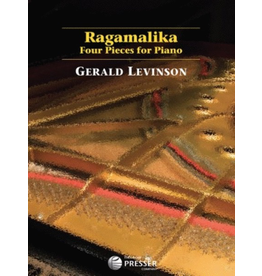
By Gerald Levinson
RAGAMALIKA (meaning garland of ragas) is a virtuosic practice in North Indian classical music, reflected most directly in the second of these pieces. The soloist departs from one principal raga (melodic mode) and whirls through a serie
Most students love to play blues and ragtime pieces. This composer's music features light textures and easy-to-play bass patterns that enable students to focus on playing with style and flair. The result is fun to play and delight
Most students love to play blues and ragtime pieces. This composer's music features light textures and easy-to-play bass patterns that enable students to focus on playing with style and flair. The result is fun to play and delightful to he
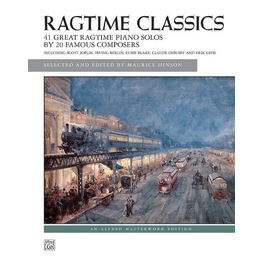
This comprehensive collection of 41 rags by 20 different ragtime masters is conveniently presented in one volume. It includes works by some of the most celebrated rag composers, including Scott Joplin, W.C. Handy, and Eubie Blake, as
By Dianne Goolkasian Rahbee
This two-volume collection of preludes contains short character pieces with a wide range of emotional expression and a wide range of technical demands from intermediate to advanced. The performer may decide to program these pre
Composer: Eugenie Rocherolle
Luscious in sound and vivid in imagery, Rocherolle transports the listener to the tropics in Island Breeze, Swaying Palms, and Tropical Punch. The humorous and exciting Wild Ghost Chase and Chip off The Ol' Bach are dramatic p
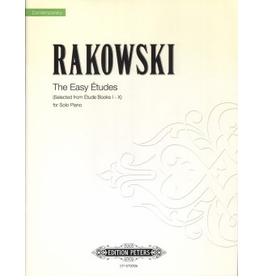
By David Rakowski
"I'm not a pianist, and the vast majority of the piano études I've written are beyond my abilities. I have, however, made a point of writing one étude in each of the ten published books that is simple enough and easy enough that I can p
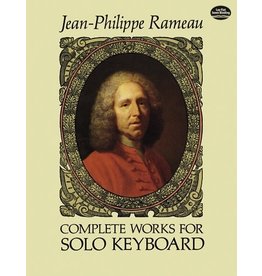
By: Jean-Philippe Rameau
A contemporary of Bach, Handel, Scarlatti, and Telemann, Jean-Phillipe Rameau (1683–1764) was a notable theorist and innovator and the preeminent French composer of his day. The depth and power that characterize his music are in
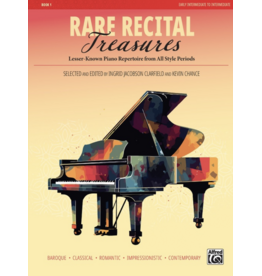
By Ingrid Jacobson Clarfield and Kevin Chance, Jennifer Linn, and Dennis Alexander
Rare Recital Treasures, selected and edited by Ingrid Jacobson Clarfield and Kevin Chance, is a three-book anthology showcasing lesser-known piano repertoire from all st
In his “Autobiographical Sketch” Ravel looks back and stresses the importance of his “Miroirs” (51480842), published in 1906, for his harmonic evolution. He said that they had “disconcerted even those musicians
By Maurice Ravel / ed. Maurice Hinson
This edition will assist piano students in achieving a better, more stylistically correct interpretation of some of Ravel's finest keyboard music. Historical background is given for each early advanced to advanced lev
By Maurice Ravel / ed. Nancy Bricard
Considered as one of the masterworks of 20th century piano literature, this critical edition utilizes interpretive clues from such noted French pianists and pedagogues as Casadesus, Perlemuter, and Ciampi, who knew Rav
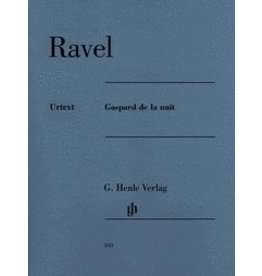
Piano cycle inspired by the prose poems of the French Romantic poet Aloysius Bertrand. Clear, oversized Urtext edition with the corresponding poem by Bertrand prefacing each part.
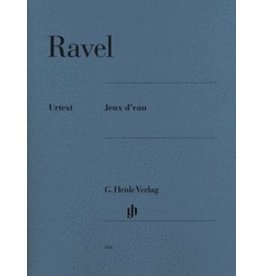
The sounds made by water – those of fountains, waterfalls, and streams – were a popular subject in musical impressionism; it was a subject that inspired Ravel. These shimmering tone paintings are among the first
By: Maurice Ravel
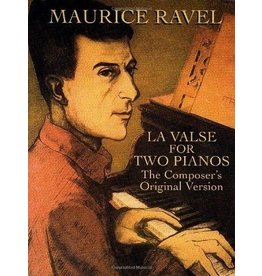
This edition of La Valse reproduces the composer's original piano duet version, which displays all the virtuosity, technical brilliance, and sensuality that are the hallmarks of his style. From the opening rumblings in the bass register,
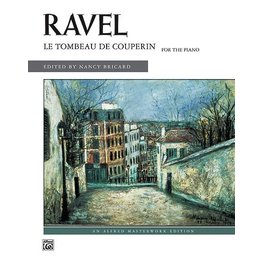
By Maurice Ravel / ed. Nancy Bricard
This major 20th-century Neoclassical work is Ravel's last work for piano solo. A tombeau is a lament, and each of the six movements is intended as a musical epitaph to friends lost in the war. The difficulty found here